KARAMOJA NEWS Truth All Day
Related Articles
By Francis Longom-Moroto
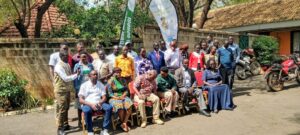
A recent stakeholder engagement in Karamoja brought together Members of Parliament, education officials, civil society organizations, and development partners to address the persistent barriers to education in the region, particularly within mining communities. The discussions centered on child labor, school feeding, infrastructure gaps, and the need for policy reforms, with a strong focus on the From Mines to School project.
Hon. Cheotich Rufina, Woman MP for Amudat District, drew attention to the region’s alarming education crisis, highlighting that illiteracy rates in Karamoja remain exceptionally high, with approximately 95% of the population in Amudat considered illiterate. Rufina attributed this largely to education policies that fail to accommodate the region’s unique circumstances and called upon legislators to review and reform these policies for greater effectiveness.
Mr. Patrick Kabayo, Executive Director of the Education Advocacy Network (EAN), stressed the importance of strengthening bylaws to ensure children remain in school and to foster better collaboration with investors in the mining sector. He identified school feeding as a major obstacle to enrollment, retention, and completion, noting that many supporting partners have withdrawn due to financial limitations.
Kabayo also raised concerns about Kongorok Sub-county, which lacks both primary and secondary schools, and urged authorities to resolve border-related issues to facilitate better service delivery. Epitu Gaddy, representing the MP for Moroto Municipality, shared positive developments from Parliament stating that Hon. Achia Remigio, MP for Nabilatuk District and Chairman of the Karamoja Parliamentary Group, had tabled a motion calling for compulsory boarding education across Karamoja during a sitting in Gulu.
Gaddy confirmed that the chairman would follow up to ensure the motion is implemented, aiming to provide a more stable learning environment for children amid ongoing development activities. Mr. Lokwii Moses, Senior Education Officer for Moroto District, outlined several pressing challenges, pointing to persistent negative community attitudes toward formal education, as well as the destabilizing impact of the recent gold discovery in Rata which has led to sharp drops in school attendance, with many of the 312 enrolled learners joining their parents in mining sites.
Moses also noted the withdrawal of school feeding support by the World Food Programme (WFP) due to funding shortages, and appealed to parents to take greater responsibility in supporting their children’s education. Happy Francis of Resource Rights Africa encouraged local leadership to take full ownership of these schools, given their location within the districts, and requested that education budgets include provisions for basic necessities such as benches.
Francis further called on mining companies to actively support campaigns against child labor and emphasized that school feeding remains a widespread challenge requiring urgent attention from all stakeholders. Ashraf Mugerwa, Programs Manager at the Education Advocacy Network, provided a detailed overview of the “From Mines to School” project. This three-year initiative, funded by the European Union and implemented by Oxfam in Uganda, the Education Advocacy Network, and Resource Rights Africa, targets the pervasive issue of child labor in the mining communities of Moroto, Nakapiripirit, and Amudat districts.
The project has established six mobile community schools — two in each district — each staffed with four teachers. It adopts a human rights-based approach, with particular attention to protecting girls from hazardous work in artisanal gold mines and facilitating their reintegration into education through the Accelerated Education Program across selected sub-counties.
To date, the project has achieved notable success: 50 learners have been referred to the mainstream education system, while 112 others have been linked to skills training institutions, pending the signing of a Memorandum of Understanding with C&D. Despite these gains, Mugerwa acknowledged ongoing challenges, including low learner turnout and shortages of food, tents, and benches. He reaffirmed the commitment of the Education Advocacy Network to address these issues through enhanced collaboration with Members of Parliament, the education department, and local leaders.
The stakeholder engagement underscored a shared determination to overcome the intertwined challenges of child labor, inadequate infrastructure, and limited resources. Participants emphasized the need for policy reforms, stronger local government ownership, private sector engagement from mining companies, and sustained support from development partners to ensure that children in Karamoja’s mining areas can transition successfully from mines to classrooms and build brighter futures.