KARAMOJA NEWS Truth All Day
Related Articles

Cinderella Atenyo-Karenga
Once synonymous with cattle rustling, armed conflict, and limited access to markets and services, Karamoja is undergoing a profound shift. The new international airport in Karenga District represents a major milestone in this transformation, promising to connect the region to global tourism, trade, and investment networks.
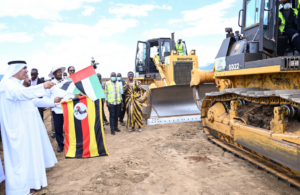
President Yoweri Museveni on Friday officially launched construction of the $72 million Kidepo International Airport, a landmark project poised to unlock the long-marginalized Karamoja sub-region’s vast economic potential while directly tackling its historical challenges of insecurity, isolation, and underdevelopment.
President Museveni highlighted how the airport will help heal decades of marginalization. He said improved connectivity is expected to accelerate the integration of Karamoja into Uganda’s mainstream economy, building on the gains already achieved through disarmament and the restoration of peace and stability.
By providing reliable air links, the project tackles key barriers such as isolation and poor infrastructure that previously hindered movement of people, goods, and services, limited economic opportunities that fueled poverty and reliance on traditional livestock practices vulnerable to rustling and underdeveloped tourism potential despite world-class assets like Kidepo Valley National Park.
The President commended local communities near Kidepo National Park for voluntarily offering land for the project, describing it as a demonstration of growing trust and shared vision for development. He assured them of immense developments and returns through tourism, wildlife conservation, trade and other opportunities that will be drawn to the area once connectivity improves.
Funded by the Sharjah Chamber of Commerce and Industry (United Arab Emirates), the airport is designed in three phases and already employs over 1,620 Ugandans. Key facilities will include a 3.6 km runway capable of handling large aircraft, a 7,408 square meter passenger terminal, a 74,200 square meter cargo terminal and supporting aviation infrastructure.
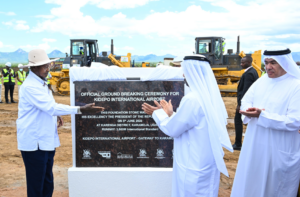
H.E. Abdallah Mohamad Sultan Alowais, Chairperson of the Sharjah Chamber of Commerce and Industry, emphasized the project’s role in fostering long-term partnerships and regional growth. Unpacking the project scope, he said construction is planned through 3 consistent phases and currently employs 1,620 Ugandans. Alowais commended Karenga residents for welcoming the project with support.
The airport is expected to catalyze growth across multiple sectors such as Tourism by easing access to Kidepo Valley National Park and other attractions, drawing more international and domestic visitors, creating jobs in hospitality, guiding, and related services.
Trade and investment will also grow through enhanced cargo capacity that will open markets for Karamoja’s livestock, minerals, marble, cement, and agricultural products. The improved logistics will support existing and new mining operations and value-addition industries. Benefits will as well extend to livestock commercialization, wildlife conservation-linked enterprises, and small business development.
Dr. John Baptist Lokii, Minister for Karamoja Affairs-designate, noted that recent investments—including cement and marble factories, mining operations, and now the international airport—have positioned Karamoja as one of Uganda’s most promising investment destinations.
Rose Lilly Akello, Ethics and Integrity Minister-designate, thanked President Museveni for appointing Karamoja leaders to key positions and pledged to foster unity for accelerated development. She also highlighted ongoing efforts to fulfill remaining presidential pledges for the region.
Olive Birungi Lumonya, Deputy Director General of the Uganda Civil Aviation Authority, provided updates on regulatory progress for Kidepo and other regional airports (Arua, Gulu, Lira, Kasese, and Kabalega), underscoring a coordinated national strategy for aviation-led growth.
The Kidepo International Airport is more than an infrastructure project — it is a powerful symbol of Karamoja’s transition from a region defined by challenges to one driven by opportunity. With peace secured, land willingly contributed, and major international investment secured, the stage is set for inclusive growth that benefits local communities, conserves natural heritage, and integrates Karamoja into East Africa’s economic mainstream.