 KARAMOJA NEWS Truth All Day
Related Articles


By Cinderella Atenyo
Indigenous leaders from across Uganda have called on government to formally recognize Indigenous Peoples in the Constitution, saying the absence of explicit recognition continues to limit their participation in decisions that affect their communities.
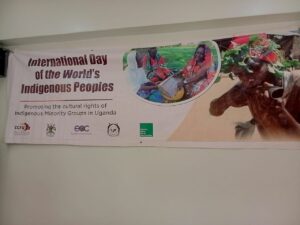
The leaders say constitutional recognition would help protect their cultural identity, rights and traditional knowledge while giving indigenous communities a stronger voice in Uganda’s development. The call was made in Moroto on Thursday during commemorations of the International Day of the World’s Indigenous Peoples, held under the theme “Indigenous Midwives: Safeguarding Life and Well-being.”
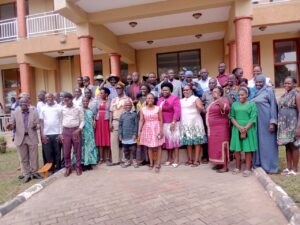
The event was organized by the Cross-Cultural Foundation of Uganda (CCFU) together with Indigenous Minority Groups, bringing together representatives of indigenous communities, government institutions, cultural leaders, health practitioners, researchers and development partners.
Barbra Babweteera Mutambi, the Executive Director of CCFU, said bringing the national event to Karamoja was intentional. She said it was meant to amplify the concerns of indigenous communities while drawing national attention to the exclusion, discrimination and limited political representation they continue to face.
“The indigenous community continues to face exclusion, insufficient recognition within the Constitution, discrimination, and constrained political participation and representation in decision-making processes,” Babweteera said.
She urged government to take deliberate measures to protect the rights of indigenous peoples and create space for them to participate meaningfully in national development.
The demands come at a time when many communities in Karamoja are struggling with prolonged dry spells, food shortages and declining livestock holdings. According to figures cited at the event, prolonged dry spells and below-average rainfall have caused crop losses of between 50 and 70 percent in many parts of the region.
An estimated 473,000 people, representing about 32 percent of the analyzed population, were facing high levels of acute food insecurity between April and July 2026. All nine districts of Karamoja were classified in Crisis, with the most severe conditions reported in Kaabong, Kotido, Karenga, Moroto and Nabilatuk.
For many pastoral households, the situation has been made worse by years of conflict and repeated weather shocks that have reduced livestock ownership. Government emergency food distributions are currently underway following reports of starvation deaths earlier in the season.
Samuel Lobeka, Chairperson of the Indigenous Minority Group in Karamoja, said indigenous communities need practical interventions that can help them adapt to the changing climate. He appealed to government to invest in water-for-production infrastructure, arguing that access to reliable water would help communities produce food even when rainfall fails.
“We appeal to the government to connect Karamoja to water for production from the lakes to help avert the issues of climate change that are affecting livelihoods,” Lobeka said.
The call comes amid growing demands for more irrigation, valley tanks, dams and other water-for-production projects across the sub-region. Some interventions, including solar-powered water systems and rehabilitated dams in Nakapiripirit and Amudat, are already showing how reliable water access can support food production and reduce distress migration, although coverage remains limited.
The question of inclusion also extends beyond climate and food security. Sam Ondiba, Chairperson of the Indigenous Minority Group in West Nile, said members of the Kebu community continue to face discrimination when it comes to recruitment and appointments to jobs.
He said this has contributed to difficulties in accessing employment and education and called for targeted government interventions to address the marginalization.
In Karamoja, Lobeka thanked CCFU for maintaining engagements with indigenous communities across Uganda, saying the efforts had contributed to peace advocacy, the publication of peace-focused materials and greater recognition of indigenous knowledge systems.
The Moroto gathering also placed traditional knowledge at the centre of discussions, particularly the role played by traditional birth attendants and indigenous health practitioners. Organizers said indigenous midwives have continued to provide important knowledge and services that have helped communities survive across generations.
They argued that recognizing indigenous peoples in the Constitution should go hand in hand with investments in water, education and inclusive decision-making. For Karamoja, leaders say such investments are increasingly urgent as climate change continues to threaten livelihoods and food security.


