KARAMOJA NEWS Truth All Day
Related Articles

By Cinderella Atenyo & Timothy Eodu
Access to justice by survivors of Gender-Based Violence (GBV) in Karamoja has always faced an uphill due to several challenges ranging from the deeply entrenched cultural norms, low reporting rates, and severe infrastructural barriers that have long perpetuated violence against women and children in the region.
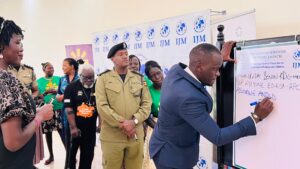
While efforts have been put in place to curb this vise, not much has been done to help survivors through the process of accessing justice. This is where the Karamoja Chapter of the Uganda Survivors Network that was launched on Tuesday, May 5-2026 in Moroto District to empower survivors and strengthen access to justice in one of Uganda’s most challenging regions comes in.
Persistent Low Reporting and Systemic Barriers
According to International Justice Mission (IJM) Uganda, only 1 in 10 cases of physical and sexual violence against women are reported to justice agencies. Key barriers include stigma, fear of retaliation, normalization of abuse, distrust in formal systems, and practical obstacles like vast distances and poor infrastructure.
Karamoja’s semi-arid landscape features remote pastoral communities with limited roads, making travel to police stations, health facilities, or courts extremely difficult—especially during rainy seasons when many areas become inaccessible. Government services are often concentrated in district headquarters, leaving many women in far-flung villages without timely medical care, counseling, or legal support. This geographic isolation compounds under-reporting and delays justice.
Cultural Roots of GBV in Karamoja
Karamoja is a predominantly patriarchal society where certain traditional practices and norms have historically contributed to GBV. Bride price (often paid in cattle) is a central cultural institution; once paid, women are frequently viewed as property of the husband’s family. This makes it difficult for survivors to leave abusive marriages, as returning to their parents’ home can be socially unacceptable or lead to further conflict.
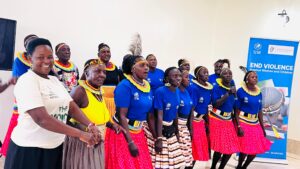
IJM Country Director Wamaitha Kimani said for instance, many cases of defilement or nay other violence against women and children in the region have been sorted by cultural leaders through negotiations; something she said has encouraged perpetrators to continue acting with impunity.
Sexual and physical abuse of women and girls has been described as culturally normalized in parts of the region, with additional risks during resource collection (e.g., fetching water or firewood) amid insecurity.
These norms intersect with poverty, food insecurity, and historical factors like cattle raiding and disarmament, creating a complex environment where formal laws struggle against informal customary systems often handled by elders.
The New Network and IJM’s Approach
IJM Country Director Wamaitha emphasized that survivor networks empower affected individuals to lead change while bridging cultural and formal justice systems. IJM has worked in Karamoja since 2020 (with support from the Embassy of Ireland) across districts including Moroto, Amudat, Napak, Nakapiripirit, and Nabilatuk.
Its goal is to eliminate violence against women and children by 2030 through stronger justice systems and survivor-centered support.
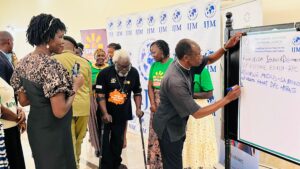
Wamaitha said the key strategies include such as training Karamojong and Pokot elders as first responders to identify cases and refer serious crimes (like defilement and domestic violence) to courts, while handling less severe issues culturally, developing gender and family guidelines with elders and promoting mobile courts, open court days, police barazas (community meetings), and dialogues to improve access despite infrastructure challenges have yielded positive results.
According to the Moroto District Community Development Officer Margy Lolem, there has been shifting attitudes towards GBV, once normalized under patriarchal norms, is increasingly seen as a human rights issue, though poverty and discrimination persist. She said the community has embraced the reporting pathways and frequently relay information that has led to arrests.
The DCDO said Moroto records 2 to 3 cases of GBV daily and her office working together with other stakeholders have managed to resolve most of them. She reported that since 2019, they have registered and successfully addressed and integrated over 1000 cases.
Survivor Voices and Recovery
Survivors at the launch shared powerful testimonies. Fatuma Abura from Nakapiripirit described enduring repeated abuse, health impacts, and premature childbirth before finding support through counseling and financial training via savings groups. Patricia Napala from Rupa Sub-county rebuilt her life and relationship after similar violence through community support and small businesses.
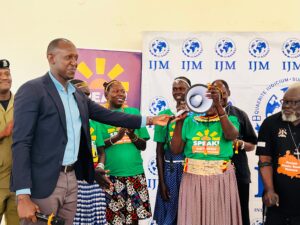
These stories highlight how economic empowerment and peer networks help survivors regain agency in a region where heavy workloads and limited opportunities compound vulnerability. From victims to now voices to other affected women and children, Fatuma and Napala say through IJM interventions, they can now authoritatively advocate for their right to hearing and commit to help other women and children to access justice.
Official Perspectives
Mt. Moroto Regional Police Commander Edirisa Kyeyune acknowledged weak public trust in justice institutions as a major hurdle, despite efforts to expand child and family protection units and community policing. He said they will work with the network to ensure that cases are handled to their conclusion without compromise.
Meanwhile the Moroto Resident District Commissioner Benon Kwikiriza stressed that his office will ensure that all systems put in place by government are working to the satisfaction and standard for quick services to the people of Karamoja. He cautioned that serious offenses like rape and defilement must not be treated as private family matters but prosecuted formally, calling upon cultural leaders to join in the fight against violence in their communities.
Broader Context and Outlook
National data shows high prevalence: 55% of ever-partnered women in Uganda have experienced physical or sexual violence, with children (especially girls) also heavily affected. In Karamoja, these issues are intensified by cultural, geographic, and developmental factors.
The launch of the Karamoja Survivors Network represents a promising step toward culturally sensitive, survivor-led solutions. Success will depend on sustained collaboration among survivors, cultural leaders, government, police, judiciary, and partners like IJM to overcome both deep-rooted norms and practical barriers of distance and poor infrastructure.