KARAMOJA NEWS Truth All Day
Related Articles

By Cinderella Atenyo
As the impacts of climate change intensify across Uganda’s Karamoja region — marked by prolonged droughts, erratic rainfall, severe land degradation, and increasing desertification — a powerful community-led response is taking root.
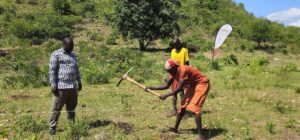
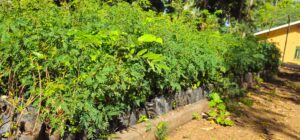
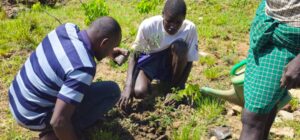
On Thursday, 200 seedlings of Leucaena leucocephala (locally known as Lusina), a hardy, multipurpose tree, were planted at Lopelpel Health Centre II in Tapac Sub-County. The initiative was led by the Advocates Coalition for Development and Environment (ACODE), in partnership with the Ministry of Water and Environment and the Moroto District Natural Resources Department, under the PACER Project.
Mr. Twebaze Paul, Research Fellow and Project Manager for the PACER programme at ACODE, described the tree planting as a practical step towards climate justice and community resilience. “Climate change is no longer a distant threat in Karamoja — it is our daily reality,” said Twebaze.
“Through this initiative, we are promoting afforestation and sustainable natural resource management while encouraging communities to abandon destructive practices such as deforestation and bush burning.”
Why Tree Planting is Critical for Karamoja
Karamoja is one of Uganda’s most climate-vulnerable regions. Rising temperatures, recurrent droughts, and land degradation have severely affected livestock production, food security, and community livelihoods. Planting Leucaena trees addresses these challenges by Fixing nitrogen in the soil to restore degraded land, providing high-quality fodder for livestock during dry seasons, acting as windbreaks and reducing soil erosion, improving microclimates and water retention and offering shade and better environmental conditions at health facilities or even communities.
Challenges Faced in Karamoja
Despite the clear need, environmental conservation in the region faces several challenges, including severe livestock pressure leading to overgrazing and destruction of young trees, prolonged dry spells and water scarcity, which reduce seedling survival rates, unsustainable human activities such as charcoal production, bush burning for hunting and land clearing, low community awareness and limited alternative livelihood options and inadequate resources for post-planting care and protection of seedlings.
Mr. John Giribo, Forest Officer from Moroto District, emphasized the broader importance of the initiative stating that tree planting is not only about environmental conservation but also about protecting community health and livelihoods in the face of climate change. He said trees improve air quality, prevent soil erosion, and support food security for households.
Mr. James Anyakun, the in-charge of Lopelipel Health Centre II, welcomed the trees, saying they will provide essential shade for patients, serve as windbreaks, and help control soil erosion around the facility. The tree planting exercise is part of a four-year project titled “Strengthening Civic Engagement, Voice, Service Delivery, and Climate Justice for Improved Accountability in Uganda,” implemented by ACODE in partnership with Karamoja Herders of the Horn (KHH) and supported by the Embassies of Denmark, Ireland, the Netherlands, and Sweden.
A 2010 Baseline study captured in the DRAFT KARAMOJA REGION DEVELOPMENT PLAN (KRDP)
2024/25-2034/35 states that Forest cover stood at 11.6% of the total land area in Karamoja, equivalent to approximately 322,210 hectares.
Karamoja has historically lost a significant portion of its tree cover. One report indicates the region has lost up to 60% of its forest cover due to human activities such as overgrazing, charcoal production, bush burning, and agricultural expansion.
The region is predominantly semi-arid with low natural tree density. Much of the vegetation consists of savanna grasslands, shrubs, and scattered trees rather than dense forests. Recent trends (2000–2022) show fluctuating vegetation cover, with a notable decline between 2018 and 2022, linked to prolonged droughts and land degradation.
Meanwhile, Uganda’s national forest cover has declined sharply from 24% (4.9 million ha) in 1990 to around 11–13% in recent years. Karamoja is one of the most affected regions due to its arid climate, heavy reliance on livestock (leading to overgrazing), and other pressures like charcoal burning.
These figures underscore why initiatives like the Leucaena tree planting at Lopelpel Health Centre are vital for restoring vegetation, combating desertification, improving soil fertility, and building climate resilience in Karamoja.