KARAMOJA NEWS Truth All Day
Related Articles



By Cinderella Atenyo-Napak

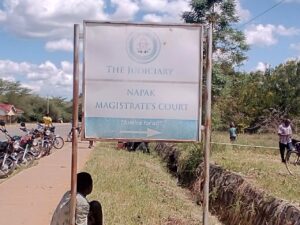
In a powerful demonstration of the justice system’s commitment to protecting the most vulnerable, a Napak Magistrate’s Court has sentenced a mother to three years and one month in prison for the brutal torture of her six-year-old daughter using a heated knife on her private parts.
Naru Anna, 39, pleaded guilty to aggravated torture before Grade One Magistrate Mugisa Abasaija on Tuesday during a special two-day public court session focused on violence and criminal cases. The session was supported by the International Justice Mission (IJM).
According to court proceedings, the incident occurred in April 2026 when an intoxicated Naru allegedly heated a knife and deliberately pressed it against the young girl’s genitals, causing severe injuries. While seeking forgiveness in court, Naru attributed her actions to the influence of alcohol, a factor increasingly linked to family breakdowns in the region.
A Stronger Message Against Domestic Cruelty
Magistrate Mugisa Abasaija emphasized that the act went beyond ordinary crime, describing it as “torture that is both inhumane and unacceptable in any civilized society.” The court used the case as an opportunity to send a clear public warning: such barbaric acts against children will not be tolerated.
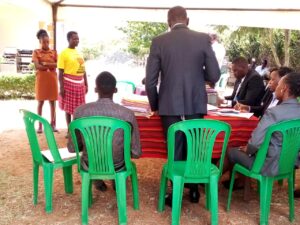
Human rights activist Lomonyang Anna, who witnessed the proceedings, welcomed the ruling as a significant step forward. She highlighted how excessive alcohol consumption is fueling child neglect and pushing many children onto the streets in Napak.
“We must embrace community policing and work hand-in-hand with law enforcement to address these issues at the household level because alcohol is quietly destroying families and exposing innocent children to unimaginable harm,” Lomonyang urged.
Rising Concern Over Child Protection in Napak
The case shines a harsh light on the persistent challenge of child-related offenses and murders in Napak District. Local authorities and partners continue to push for stronger child protection mechanisms, including better rehabilitation support for victims and more aggressive campaigns against substance abuse.
This sentencing comes at a time when communities are being called upon to shift from silence to collective action. By holding such public sessions, the judiciary, supported by IJM, is not only delivering justice but actively working to change harmful social norms.
Alcohol-driven domestic violence in Karamoja is a significant and well-documented issue, though exact recent case numbers are limited due to underreporting, reliance on community-level handling, and focus on broader GBV (Gender-Based Violence) statistics.
Scale of the Problem
In Uganda, Karamoja has the highest regional alcohol consumption rate at 46%, far above other areas. This is strongly correlated with high multidimensional poverty (76% in the region) and social issues like GBV, child neglect, teenage pregnancies, and crime.
Multiple studies and local reports consistently identify excessive alcohol (especially cheap commercial waragi/spirits and local brews-kwete) as a major driver of domestic and interpersonal violence. Drunkenness frequently leads to spousal fights, child abuse, divorce/separation, and broader family breakdown. Medical workers and community members confirm alcohol’s role in domestic violence cases.
While Uganda-wide GBV is high, Karamoja stands out due to the combination of post-disarmament livelihood shocks, trauma, unemployment among youth/men, and easy access to potent, unregulated alcohol. Alcohol abuse has contributed to a “dramatic increase” in domestic and gender-based violence cases.
Exact quantitative district-level case counts for “alcohol-driven” GBV cases are scarce in public reports (due to many cases being handled informally by local leaders), but the correlation is described as pervasive and rising alongside alcohol availability since the mid-2000s.
Alcohol-driven domestic violence in Karamoja disproportionately impacts women and children, though men (especially youth) are the primary heavy drinkers and often the perpetrators. Women bear the brunt of interpersonal consequences. They face physical and sexual violence from intoxicated husbands/partners. Cultural factors like bride price, patriarchal norms among others make it harder for women to leave abusive situations. Women also suffer economically as household resources are diverted to alcohol.
Children are also highly vulnerable to neglect, physical abuse, and indirect harm. Parents (especially when drunk) may neglect or abuse them; traditional brew residue (locally known as Adakai) is sometimes used as a food substitute for infants/children due to poverty and lack of milk, exacerbating health issues. Exposure to domestic violence traumatizes children, and parental intoxication contributes to cases like the one in Napak. Male youth drinkers are often cited as particularly violent.
Primarily men and male youth who drink to get drunk are said to be perpetrators. Elders and women also consume alcohol, but problematic binge drinking linked to violence is more associated with younger men facing idleness and lost traditional roles after disarmament. Post-2006 disarmament led to livestock loss, eroded pastoralist identity, trauma, poverty, and unemployment — all psychosocial drivers pushing excessive drinking as a coping mechanism.