KARAMOJA NEWS Truth All Day
Related Articles


By Timothy Eodu
For communities that have long struggled to cross flooded streams and move easily between different parts of Moroto, a new bridge is more than just concrete and steel. It is a safer route to the market, a shorter journey home and, increasingly, a symbol of the kind of development Moroto Municipality is trying to build.
As the municipality pushes to improve its infrastructure and expand its urban footprint, Moroto Municipality Member of Parliament Francis Adome Lorika has praised local leaders and engineers for delivering projects that are changing the face of the growing town.
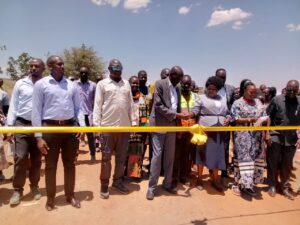
Speaking during the commissioning of the newly constructed bridge, Adome commended Moroto Municipality for what he described as hard work and a development approach that is beginning to set an example for other local governments.
He said the bridge was an important investment because it connects communities that would otherwise be separated, particularly during periods of heavy rainfall. Adome also singled out the Municipality’s Town Clerk and technical team, saying their work was helping to demonstrate what could be achieved when public projects are closely managed and implemented with a strong sense of local responsibility.
He particularly recommended the continued use of the force account method, where local governments directly implement projects through their own technical staff rather than relying entirely on external contractors. According to the MP, the approach can save public funds and allow communities to see government resources translated into tangible development.
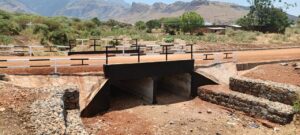
“The force account method should be embraced because it helps to save money,” Adome said, while praising the municipal engineers and workers who constructed the bridge. In a light-hearted moment, he referred to the local engineers as Moroto’s “Black Chinese,” in recognition of the skills and dedication they displayed during the construction works. He later made a cash contribution of Shs500,000 to the team.
His remarks add to the wider story of a municipality increasingly relying on its own technical capacity to deliver infrastructure. As previously reported by Karamoja News, the Nachap Road bridge in Kakoliye Ward was constructed under the force account mechanism using the Municipality’s technical personnel, connecting communities and supporting access to surrounding economic and public facilities.
The project forms part of wider investments in roads and drainage infrastructure as Moroto prepares for further urban growth. But Adome said physical infrastructure alone will not make a city. He challenged residents to begin changing their mindset, particularly in the areas of sanitation, garbage disposal and open defecation.
The call reflects a growing concern that as Moroto develops physically, residents must also embrace the responsibilities that come with urban living. Poor waste disposal and open defecation, leaders say, continue to undermine efforts to build a cleaner, healthier and more organised municipality.
Adome also used the occasion to raise the question of Moroto Municipality’s expansion, calling on Tepeth County MP Albert Lokoru to support the inclusion of the two neighbouring villages of Nabuin and Singila into the Municipality. He argued that expanding the Municipality would increase its funding base and provide greater opportunities for infrastructure and service delivery.
The proposal is part of a broader conversation around Moroto’s future as it seeks greater urban development and eventually pursues city status. For the young engineers who have become known locally as the “Black Chinese,” the bridge may therefore be more than a completed assignment. It is proof that the skills needed to build Moroto’s future may already be here.