KARAMOJA NEWS Truth All Day
Related Articles

By Timothy Eodu
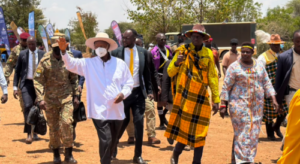
For years, Karamoja has been associated with insecurity, cattle raids, guns and hunger. But as traditional drums and dances filled Naitakwae Ceremonial Grounds on Wednesday, leaders said the region was beginning to tell a different story.
Minister for Karamoja Affairs John Baptist Lokii said the cultural festival offered an opportunity to change the negative image that has followed Karamoja for generations and showcase what the region can offer.
“Karamoja has been known for bad things,” Lokii said, adding that the time had come to rewrite the region’s history by showcasing its culture, resources and development potential.
The minister pointed to the prevailing peace as one of the major changes taking place in the region. He said formerly abandoned agricultural land is being reopened as communities regain confidence to cultivate, while investments and economic activities are beginning to grow. For many residents, however, the transition from insecurity to economic prosperity remains incomplete.
While guns have become less visible in many communities, hunger remains a major challenge. Prolonged dry conditions have affected agricultural production, leaving households that had invested in farming struggling to recover their livelihoods.
It is against this background that President Yoweri Kaguta Museveni used his address at the cultural festival to emphasise the need for Karamoja to move towards productive and climate-resilient agriculture. The President called for greater use of irrigation for long term solutions and the cultivation of fast-growing crops for short term, saying agricultural production must be strengthened if the region is to overcome recurring food shortages.
The proposal comes at a time when communities are increasingly looking beyond livestock and rain-fed farming for reliable sources of food and income. For a region where unpredictable rainfall can determine whether a household harvests food or faces hunger, access to water for production could fundamentally change how families farm.
Some farmers have already demonstrated the possibilities. Irrigation-supported vegetable farming has allowed farmers in parts of Moroto to continue producing crops such as onions, tomatoes and leafy vegetables even during periods of prolonged dryness. The experience is increasingly raising hopes that investment in irrigation could allow more households to produce food throughout the year rather than depending entirely on increasingly unreliable rainfall.
President Museveni’s emphasis on fast-growing crops such as green grams, tapara beans, millet among others also speaks to the immediate needs of families facing food shortages. Crops that mature within a shorter period (below 75 days) could help households produce food more quickly while reducing the risks associated with unpredictable weather. But the challenge is taking such initiatives beyond individual farmers and demonstration sites.
Communities need reliable water sources, affordable farm inputs, extension services, access to markets and financing if agriculture is to become a dependable source of household income. Lokii said the region’s economic transformation must therefore accompany the peace that has been achieved. He cited government programmes such as the Parish Development Model (PDM) and other livelihood interventions as part of the efforts to improve household incomes.
However, he also asked government to consider delaying recovery periods for funds accessed through programmes such as PDM for farmers who suffered losses after investing in agriculture and being hit by prolonged drought.
The minister’s appeal highlights the difficult position many households currently find themselves in: they have been encouraged to move into productive economic activities, but climate shocks can wipe out their investments before they begin generating returns. The cultural festival therefore came at an important moment for Karamoja.
The region is celebrating peace, but leaders acknowledge that peace must now translate into better livelihoods. It means turning fertile land into productive farms, using water to overcome dry spells, creating markets for farmers, expanding livestock production and developing the region’s tourism and mineral potential. It also means changing how the rest of Uganda sees Karamoja.
Lokii said the region should no longer be defined by the negative stories of its past but by its cultural heritage and economic potential. The transformation was echoed by Fr. Raphael Loberei, who told President Museveni that former Karachunas were returning to their traditional routes, but increasingly as traders carrying money rather than guns.
That image captures the change leaders want to see become permanent. Karamoja’s challenge now is to ensure that the peace achieved through years of security and community efforts produces tangible benefits for ordinary households.