KARAMOJA NEWS Truth All Day
Related Articles

By Cinderella Atenyo
Karamoja is being urged to prepare for possible flooding and other climate-related impacts as the region heads into the October to December 2026 rainfall season, at a time when communities are still grappling with food insecurity following prolonged dry conditions.
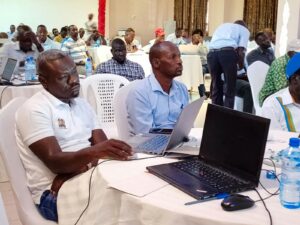
The warning was issued during the Sixth Sub-Regional Climate Outlook Forum (Sub-COF6), held in Lodwar, Kenya, from September 8 to 10, 2026, under the theme “Harnessing climate services for early action and resilience in the Greater Horn of Africa region in the face of a strong El Niño.” The forum brought together climate experts, government representatives, pastoralists, indigenous forecasters and other stakeholders from the Greater Horn of Africa.
According to the IGAD Climate Prediction and Applications Centre (ICPAC) seasonal outlook, the Karamoja Cluster has a 63 percent probability of receiving above-normal rainfall during October to December, compared with 90 percent for the Mandera Cluster and 75 percent for Moyale-Borana. ICPAC’s wider regional outlook says the Greater Horn of Africa is expected to experience wetter-than-normal conditions during the OND season as El Niño strengthens.
The forecast brings a complicated message for Karamoja. More rainfall could help replenish water sources, improve pasture and create better conditions for crop production after a difficult period of drought and hunger. However, ICPAC and its partners warn that excessive rainfall could also result in flash and riverine flooding, waterlogging, displacement and outbreaks of water- and vector-borne diseases.
The warning is particularly significant because Karamoja is approaching the rainy season from a position of vulnerability. The region has already experienced serious food shortages after poor rainfall and crop failures, with the hunger situation prompting government emergency food interventions earlier this year.
This makes early warning and early action critical. The question is no longer simply whether Karamoja will receive rain, but whether communities and authorities can use climate information early enough to benefit from the rains while reducing their destructive effects.
At the Lodwar forum, stakeholders called for contingency plans to be updated, emergency supplies pre-positioned, critical infrastructure protected and climate information delivered to communities in forms they can understand and act upon. For Karamoja, this means strengthening the link between ICPAC forecasts, Uganda’s meteorological authorities, district disaster-management structures, local leaders, radio stations, extension workers and indigenous forecasters.
The Coordinator of the IGAD Drought Disaster Resilience and Sustainability Initiative, Mubarak Mabuya, who read the outcome statement, disclosed that an analysis of sea-surface temperatures indicates 1997 and 2023 as analogue years periods that ushered in unusually wetter-than-average seasons across the region. He further noted that consistently above-average temperatures are expected across all clusters.
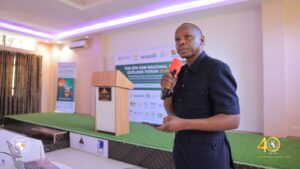
Mubarak urged stakeholders to fortify flood preparedness by revising and modernizing contingency plans, pre-positioning critical supplies, safeguarding vital infrastructure, and delivering clear, timely early-warning information to communities. He said while the rains will improve pasture, water sources and crop prospects, they also pose serious risks of riverine and flash floods, waterlogging, displacement and outbreaks of water and vector-borne diseases.
The region can also improve preparedness by combining scientific forecasting with local knowledge. Traditional forecasters and pastoral communities have long observed changes in weather, vegetation, animal behaviour and other environmental indicators. When such observations are combined with satellite information, weather stations, climate models and hydrological forecasts, authorities can develop more localized warnings about where heavy rainfall and flooding are most likely to occur.
In Turkana, Edome Apuwa, a traditional forecaster from Lodwar, issued a warning that the October–November rains are likely to be destructive, beginning in Turkana South and Turkana East. He advised residents to refrain from crossing swollen rivers, noting that the torrential downpour could persist for up to eight hours, from morning until 2:00 pm. Apuwa further projected that following the OND season, the next rains are expected in April 2027, and cautioned that malaria outbreaks may follow the flooding, urging government to step in promptly and called on communities to relocate away from river areas to minimise the devastating impacts of the floods.
Early warning should also move beyond simply telling communities that there will be “above-normal rainfall.” It should explain what the forecast means for people on the ground: which rivers could become dangerous, which roads and bridges may be cut off, where livestock should be moved, which settlements are vulnerable and what health facilities need to prepare for possible disease outbreaks.
The warning should therefore trigger action before the rains become dangerous. District authorities and humanitarian agencies need to identify flood-prone communities, inspect roads and bridges, prepare health facilities, position emergency medicines and supplies, protect water points and establish clear communication and evacuation arrangements where necessary.
Karamoja’s experience with drought provides an important lesson. Climate preparedness can no longer focus on drought alone. Increasingly unpredictable weather requires communities to prepare for both extremes—too little rain and too much rain. The October-December forecast could become an opportunity for Karamoja to recover pasture, water and food production, but only if the region is prepared to manage the risks that come with the expected rains.