KARAMOJA NEWS Truth All Day
Related Articles

By Timothy Eodu

Karita Health Centre IV in Amudat District has received a major boost under MTN Uganda’s 21 Days of Yellow Care, with health workers, local leaders and development partners describing the intervention as a timely response to the needs of one of the region’s hard-to-reach communities.
The support, delivered in partnership with organisations including Stanbic Bank, CUAMM, UNFPA and the Makerere University Business School, comes at a time when the facility is increasingly handling complicated cases but continues to struggle with severe staff shortages, inadequate accommodation, poor road access and limited emergency transport.
Amiti Anna, the LC1 chairperson of Karita Village, said the improvements at the facility were welcome but called for urgent action on the persistent shortage of health workers and staff housing. The officer in charge of Karita HCIV, Dr George Ogwang, said the journey to fully functionalise the facility began in 2025 through the combined efforts of government and several partners.
He credited CUAMM and Food for the Hungry with playing an important role in organising and equipping the laboratory, while other partners supported the improvement of key services. According to Dr Ogwang, the introduction of blood transfusion services and the functionalisation of the theatre have significantly expanded the facility’s capacity.

“In July alone, seven mothers underwent operations, while by August 5, another five had already been operated on,” he said.
The improved theatre has also transformed Karita HCIV into a referral point for lower-level health facilities in the surrounding area. However, Dr Ogwang said the growing demand for services has exposed the limitations of the HCIV.
With Karita located far from Moroto Regional Referral Hospital and other higher-level facilities, he said there was a need to consider upgrading the facility to a general hospital so that complicated cases can either be managed locally or stabilised before referral.
He also appealed for additional health workers, staff accommodation and two vehicles — an ambulance for emergency referrals and another vehicle to support administrative and operational work. The Amudat District Health Officer said Karita HCIV serves a population of more than 40,000 people, including communities from neighbouring Kween District and across the border in Kenya.
He said the facility has become an important lifeline for communities that would otherwise have to travel long distances to access essential health services. The DHO noted that some lower health facilities in the district are located as far as 160 kilometres from higher-level services, contributing to delays in treatment that can result in preventable deaths.
He called for the upgrading of lower-level facilities to bring services closer to communities and reduce the burden on Karita HCIV. Like other districts in the Karamoja region, Amudat is also grappling with critical staffing gaps, leaving the few available health workers overwhelmed by the growing workload.
A representative of the Health Management Committee thanked MTN and Stanbic Bank for their contribution towards improving the appearance and capacity of the health centre but said infrastructure challenges continue to affect access to services. He pointed to poor network coverage and a broken bridge that has disconnected some residents from the facility.
The committee representative appealed to leaders to prioritise the repair of the bridge, warning that poor access could be particularly dangerous for pregnant mothers and other emergency patients. He also called for incentives for traditional birth attendants, arguing that supporting them to refer mothers to formal health facilities could help reduce unsafe deliveries in the community.
Karita Town Council Mayor said the donation carried great meaning for the people of Karita and pledged to encourage residents to make full use of the improved services. Associate Professor Diana Ndagire Ntamu of Makerere University Business School said maternal health remains the foundation of healthy communities. She said partnerships were necessary to ensure that essential services reach even the most remote communities.
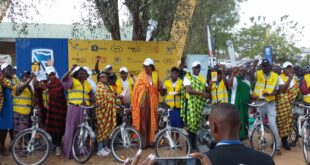
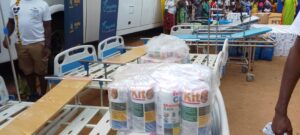
MUBS supported Karita HCIV with 10 Buffalo bicycles, 50 mama kits, soap and sugar for the maternity ward. Dr Damasko, representing CUAMM, said the intervention demonstrated the power of partnerships. He said CUAMM supported the renovation of the theatre, while Stanbic Bank contributed to equipping it. He reaffirmed CUAMM’s commitment to supporting districts across the Karamoja region to ensure that hard-to-reach communities are not left behind.
Diana Ondoga, the Manager for Corporate Affairs at Stanbic Bank, said corporate institutions have the ability to transform lives when they work together. She said Stanbic and MTN have maintained a long-standing partnership in strengthening health services in underserved communities. Stanbic supported Karita HCIV with 200 mama kits as part of the intervention.
As the bank marks 35 years of service in Uganda, Ondoga said Stanbic hopes to deepen its long-term commitment to sustainable development, including improved healthcare. UNFPA representative Dr Richard Mwesigwa said the organisation was pleased to be part of the MTN Yellow Care initiative and to support the Karita community. He said collective responses to community challenges often produce greater results, particularly in reducing preventable problems such as maternal deaths.
Dr Mwesigwa noted that Karamoja still requires significant investment to improve access to services and people’s quality of life, adding that UNFPA remains actively engaged in supporting the region alongside government and other development partners.
Sr Jane Frances Achan, the Assistant Commissioner for Midwifery Services, who represented the Director General of Health Services at the Ministry of Health, thanked MTN and its partners for taking community health seriously. She said the Ministry is paying particular attention to hard-to-reach communities, where partnerships are helping to close existing gaps.
According to Sr Achan, investments in equipment, skills and better working environments for health workers are essential to improving service delivery, especially for mothers and newborns. MTN General Manager for Corporate Affairs Denis Kakonge said Karita was among the last of four health facilities visited during this year’s MTN Yellow Care activities.
He thanked health workers in Karita for continuing to serve the community despite the limited resources available to them. Kakonge said MTN Yellow Care has been impacting communities for 18 years, with the initiative forming part of the company’s broader commitment to improving the wellbeing of the communities it serves.
“What we are doing together with our partners matters a lot to the people of Karita,” he said.
He added that connectivity should not only be viewed in terms of phone calls and mobile money, but also as a tool for improving workflows and service delivery across different sectors. The issue of poor network coverage was also raised by Micha Lolem, the Upe County MP, who said several sub-counties in the constituency continue to experience limited or no network access.
He said poor connectivity was frustrating the implementation of government programmes, including the Parish Development Model. Lolem identified Loro and Kongatunyo as strategic areas where network boosters could potentially improve coverage across a wider section of the affected communities. He also called for the upgrading of lower health facilities and the construction of new ones in areas that remain underserved.
Amudat Woman MP Cherut Ruphina described the intervention as a lifeline for the Pokot communities, particularly the people of Karita who live several kilometres away from major hospitals in Amudat and Moroto. The Minister of State for Karamoja Affairs, Esther Anyakun, said she would follow up on the concerns raised about an ambulance, staff accommodation at Karita HCIV and the upgrading of existing Health Centre IIs to Health Centre IIIs.
She said government had already appropriated funds for the recruitment of health workers and urged Amudat District to fast-track the recruitment process to improve service delivery. Anyakun also called on development partners to continue extending support to Karamoja, particularly Amudat District, while urging government to expedite the construction of additional health facilities in line with the policy of ensuring that every sub-county has access to at least one health centre.
She said the Karita intervention demonstrated the importance of equipping health facilities with modern infrastructure, equipment and supplies.
“Government efforts to improve the facility, combined with the support of development partners, can help transform health outcomes in Amudat,” she said.
For Karita, the improvements have brought renewed hope. But as the number of patients seeking services continues to grow, leaders and health workers say the next challenge is ensuring that the facility has enough staff, accommodation, transport, reliable connectivity and stronger infrastructure to match its expanding role.