KARAMOJA NEWS Truth All Day
Related Articles



By Timothy Eodu
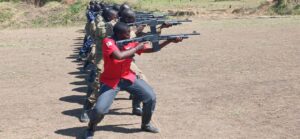
The Uganda Police Force-UPF has today, 22-April 2026, passed out former elections Special Police Constables-SPCs, at the Police Counter Terrorism Training School, Olilim, following completion of specialized training for deployment under licensed Private Security Organizations (PSOs) in an event presided over by the Inspector General of Police, IGP Abbas Byakagaba. The SPCs were drawn from 32 policing regions across the country.
According to the Commandant of PTS Olilim, SSP Jasper Oloka, the trainees underwent 16 modules covering weapons safety, guard and escort duties, counter-terrorism awareness, crime scene management, and professional ethics. SSP Oloka said this is the first time the Uganda Police Force has undertaken formal training of personnel for the private security sector at this scale.
He added that the training has built the trainees confidence and competence to execute duties and contribute to national security. AIGP Moses Kafeero Kabugo, Director Human Resource Development, commended the trainees and instructors for their dedication and discipline. He attributed the successful completion of the course to strong coordination among all Police directorates.

On his part, AIGP Frank Mwesigwa, Director Operations and Supervisor of Private Security, said Police is committed to ensuring private security personnel meet national standards to enhance public safety. He added that they are streamlining private security uniforms to ensure they remain distinct from those of the UPF and UPDF.
AIGP Mwesigwa stated that they have also established a central databank for this first cohort of trained private security guards because private security is often the first line of safety for citizens, and closer coordination with Police is essential.
Meanwhile, IGP Abbas Byakagaba described private security as indispensable and essential to Uganda’s multi-layered security architecture because they are often first responders at crime scenes and a critical component of the country’s national security framework. The IGP reiterated that this is why adequate training is non-negotiable. He noted that after the election period, the Police leadership decided to utilize the skills of SPCs rather than let them go to waste, and engaged PSOs to absorb them into the private security industry.

IGP Byakagaba added that private security organizations contribute to the country’s transformative agenda by employing over 80,000 Ugandans, a figure higher than the current strength of the Uganda Police Force. He urged Chief Executive Officers-CEOs of private security companies to prioritize the welfare of guards.
The IGP challenged the graduates to view their new roles as a national calling, urging them not to look at private security as mere employment but as service above self in the protection of the nation. “Go and execute your duties with discipline, integrity, and professionalism.” He urged.
According to a 2024/5 survey (TAP TO READ) by The International Code of Conduct Association (ICoCA), about 47% of the guards in Uganda have an employment contract. About 88% of these guards are paid above the minimum wage of USh 130,000, though it is considered low.
Key challenges with contracts, salary and benefits include income inequalities across different guards, low access to benefits like medical cover by security guards since the employers don’t provide the benefits and the majority cannot afford it with their low income, guards working for long hours since the firms employ few guards, a lack of staff coordination, a lack of clear career growth plan for guards and a lack of employer protection of their rights in times of crisis.
It adds that there’s a very high incidence of training, with 93% of the guards trained by employers. About 86% of staff are trained on working with clients, 95% on rules on the use of force, 66% on health and safety and 66% on human rights. However, the guards feel the trainings are inadequate. The challenge with employee training is that they are not up to date and not easy to comprehend.
Employers recruit qualified guards so that they don’t have to conduct training and employers do not provide equipment after training. The study demonstrates the need for more trainings and allocation of more time for training, motivating the guards to attend trainings with incentives like free transport, training allowance, provision of equipment after training as well as training on soft skills like how to present and express themselves.