KARAMOJA NEWS Truth All Day
Related Articles


By Cinderella Atenyo-Moroto
As years go by, youth inclusion in matters that govern their societies is becoming more necessary because they make majority of the population yet they remain less involved or just sidelined. In Karamoja, this vise will soon be history as development partners come in to bridge the divide.
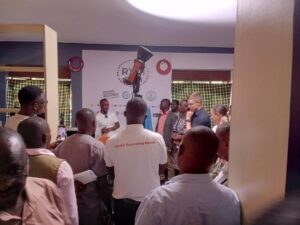
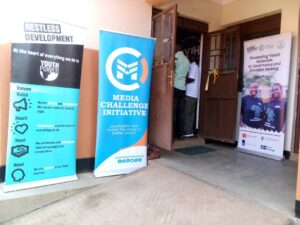
Restless Development in partnership with Karamoja Youth Efforts to Save the Environment-KAYESE and Media challenge Initiative-MCI has launched the Regional Youth Information Hub in Moroto District to promote youth inclusion in governance and decision making in the region. Youth Inclusion in Governance and Decision-making in Uganda (YIGA) is a three years project funded by the Royal Danish Embassy,a flagship initiative at transforming youth engagement in governance and social accountability across the Karamoja Sub-Region.
Supported by the Royal Danish Embassy, Embassy of Ireland, and the Kingdom of the Netherlands, the hub stands as a beacon of hope in an area where young people often face limited access to quality education, job prospects, and platforms to voice their concerns. The hub will be a dedicated space designed to empower the region’s youth with access to reliable information, skills training, digital resources, media tools, and opportunities for civic engagement.
According to Restless Development Hub Director, Gabriel Iguma, the Regional Youth Information Hub will provide a platform where young people can access information, develop digital Skills and strengthen youth civic competence for effective engagement in governance, decision-making and service delivery processes in the region.
Iguma added that, the Hub will help bridge the information gap among youth, urging them, especially the content creators, Journalists, to use the opportunity to get the digital Skills to tell the critical story of Karamoja, hold duty bearers accountable and influence change in the Sub-Region.
Mpindi Abaas, Chief Executive Officer-CEO Media challenge Initiative noted that Journalism can make a better world and information is the glue that keeps the society and democracy together. He said the hub will help shape the young people to tell stories that sell the region in a more effective and informative way.
Abaas urged that through the hub, critical information that the young people will need in order to hold duty bearers accountable and reshape the governance in their local communities will be readily available through continuous trainings and hands on engagements.
Meanwhile, the Deputy Resident District commissioner for Moroto, Justine Tuko commended the implementers and the funders for the good initiative to supporting the region. He tasked the beneficiaries to take charge and use the hub to pass out civic education.
Brief facts
According to a Restless development abstract, (Click), Karamoja has one of the youngest populations in the country, with youth making up over three-quarters of residents—yet participation is very low. Nationally, nearly 90% of Ugandan youth report no engagement at the national level, 77% at district level, and 46% at community level; these gaps are even wider in Karamoja due to structural and contextual challenges. Youth in Karamoja are excluded by cultural norms that limit interactions with elders, weak coordination structures, limited access to information on governance and development programs, and mobility pressures caused by climate-related issues such as drought and flooding.
Cultural impact
Traditional Karamojong society is strongly patriarchal and elder-led. Decision-making historically rests with councils of elders and age-set systems rooted in pastoralist customs. Youth, especially young men in herder roles and young women are culturally expected to show deference and avoid direct public challenges to elders or leaders. This creates a deep-seated norm against open questioning or participation in formal governance spaces, which are often dominated by older male authority figures.
While these cultural structures provide strong community cohesion and conflict resolution in pastoral life, they clash with modern decentralised governance (local councils, barazas, and participatory planning introduced since the 1990s). The result is that youth voices are sidelined, policies fail to reflect their priorities (unemployment, education, climate resilience), and accountability mechanisms remain weak. Fear of authority, low civic education, and historic marginalisation of the region further discourage engagement. Affirmative-action quotas for youth in councils exist but are often symbolic rather than substantive.