KARAMOJA NEWS Truth All Day
Related Articles

By Timothy Eodu
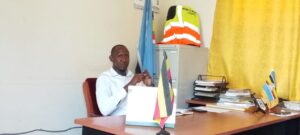
The Uganda Bureau of Statistics (UBOS) has urged journalists and local government officials in Karamoja to rely on accurate and regularly updated statistics when reporting, planning and making decisions that affect communities.
The call was made during a UBOS press conference held at the office of the Resident District Commissioner in Moroto, where officials engaged journalists on the importance of official statistics and the role of the media in promoting evidence-based public debate.
Moroto Resident District Commissioner Benon Kwikiriza said reliable statistics are essential for effective planning and service delivery, warning that decisions based on outdated information can leave some communities without the services or support they need.
“Good data is equal to good planning. If you use wrong data for planning, your service delivery will be very poor,” Kwikiriza said.
He pointed to recent food distribution challenges as an example of the consequences of relying on outdated information. Kwikiriza said food distribution by the Office of the Prime Minister had relied on UBOS data from 2024, arguing that population and household changes over the subsequent period could create gaps in identifying beneficiaries.
He suggested that household listings and other critical local government data should be updated regularly, particularly in regions such as Karamoja where population needs and household circumstances can change.
According to Kwikiriza, accurate statistics are not only important during emergencies but are also necessary for routine government planning.
He said authorities need reliable information to determine the number of farmers requiring agricultural inputs, estimate production capacity, plan markets and procure adequate medicines for health facilities. The RDC gave the example of malaria medicine, saying underestimating the number of people requiring treatment could result in under-procurement and affect service delivery.
“Just imagine you’re procuring for malaria, and you under-procure. That means we’re going to lose lives, because the person dealing with the procurement doesn’t have the right data,” Kwikiriza said.
UBOS Public Relations Officer Didacus Okoth told journalists that the Bureau’s mandate is to collect, analyse and disseminate official statistics to support government planning and informed decision-making. Okoth said statistics are generated from various sectors, including health, education, agriculture, labour, prices, energy, infrastructure and economic activity.

He said the information provides government with a basis for assessing the performance of programmes and determining where interventions are required. He also encouraged journalists to use official statistics when reporting on social and economic issues instead of relying on rumours, assumptions or unverified claims.
“It is very risky to speculate. When you speculate, you end up raising tension with other people because you do not have any evidence. But when you have evidence, you can debate based on scientific and well-researched information,” Okoth said.
He said the media has an important role in making statistical information accessible to the public because journalists help translate official findings into information that communities, leaders and other stakeholders can understand and use.
Among the statistics presented during the press conference were findings from the National Peace, Governance and Security Survey. Okoth said the survey found that nationally, 89 percent of people aged 18 years and above were aware of various human rights, while 93 percent expressed trust in the different justice systems.
The survey further found that 57 percent were aware of government efforts to fight corruption, 82 percent expressed trust in government’s ability to protect them and their property, while 69 percent were satisfied with their experience with public offices.
Okoth said such figures demonstrate why statistical evidence is important in public discussions, as it allows issues to be examined using measurable information rather than perceptions alone. He also highlighted ongoing UBOS activities, including combined listing to support the Labour Market Survey, Uganda National Household Survey and the 2026 Violence Against Women and Children Survey.
The Uganda National Household Survey, he explained, is intended to provide information that can help assess changes in household welfare and poverty. He said the national household poverty rate currently stands at 16 percent, with the upcoming survey expected to provide updated information on the country’s poverty situation.
UBOS has also continued producing statistics on education, health, agriculture, prices, labour, construction inputs, energy and other areas. The Bureau’s website currently lists the Baseline Education Census Report 2025 and other recent statistical publications, underscoring the continuing production of official data for planning and public use.
The officials stressed that the responsibility for accurate statistics does not rest with UBOS alone. Local government departments are also expected to maintain reliable administrative records and regularly update information in critical sectors. Kwikiriza consequently called on local government planning units and sector departments in Karamoja to continuously update their data, particularly in health, education, production and administration.
For journalists covering Karamoja, the message from the press conference was that statistics should form part of the evidence behind stories, particularly when reporting on population, poverty, food security, health, education, government programmes and service delivery.
The call comes as Uganda continues to use data from the 2024 National Population and Housing Census as a major statistical reference. UBOS reports that the census recorded a national population of 45,905,417 people and 10,698,913 households.
As Karamoja continues to experience changes in population, livelihoods, food security and public service needs, officials say regularly updated local statistics will be critical in ensuring that planning and interventions reflect the realities of communities on the ground.