KARAMOJA NEWS Truth All Day
Related Articles
By Cinderella Atenyo
Behind the statistics, meetings and official reports are women who suffer in silence, children whose pain is never reported and families struggling to find justice in a region where help can often feel far away. It is this silence that leaders and justice actors are now being challenged to confront as Karamoja grapples with persistent cases of gender-based violence and violence against children.
At a stakeholders’ meeting in Moroto on Thursday 20th August 2026, Deputy Regional Police Commander Mt. Moroto Region, George Obia, delivered a message that went beyond policing. He questioned the choices communities make, the responsibilities parents sometimes abandon and the mindset that continues to define Karamoja as a region permanently trapped in poverty.
Obia challenged parents to keep their children in school and urged communities not to remain silent when police officers frustrate victims or families trying to report cases of violence. With thousands of animals across the region, Obia questioned why some families continue to accept poverty as an unavoidable part of life, arguing that the resources available within households can be used to educate children and build better futures.
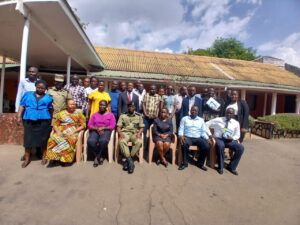
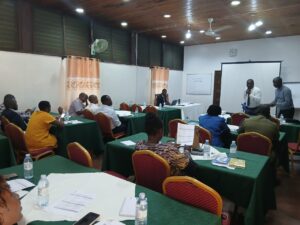
The discussion came during the International Justice Mission (IJM) stakeholders’ inception meeting on the Coordinated Case Response Mechanism-CCRM, held at Mt. Moroto Hotel. The initiative brings together government departments, police, criminal investigators and development partners from Amudat, Moroto, Nakapiripirit, Nabilatuk and Napak districts to address a difficult question: when a woman or child suffers violence, who responds — and how quickly?
For Napak District Community Development Officer Agan Mary Apuun, the answer must go beyond arresting perpetrators. A survivor, she said, needs protection, support and a chance to rebuild a life. Yet even that basic protection remains out of reach for many. Napak District currently has no dedicated shelter where survivors of gender-based violence can find immediate safety.
Apuun also pointed to child labour as one of the district’s most serious challenges. Still, there are signs that intervention can change lives. More than 1,000 children who had been rescued from situations of child labour have been reintegrated into school. Behind that figure are more than 1,000 individual stories — children who, at least for now, have been given another chance to sit in a classroom and imagine a different future.
Across the region in Amudat, however, the challenges remain deeply rooted. Community Development Officer Lotuw Pembe Joseph said cases of gender-based violence and defilement continue to occur, fueled by poverty, harmful cultural practices and the unique challenges of a porous border district. But violence is only one part of the crisis.
The other is silence. Fear prevents some victims and families from reporting cases. Others may not know where to turn. And in a district with limited services, civil society organisations often fill gaps in protection and support. According to Byron Mwanje, the Justice System Programme Manager at International Justice Mission, the problem is not confined to Karamoja.
IJM’s 2024 research found that six in every 10 children in Uganda have experienced sexual violence, while six in every 10 partnered women have suffered violence. For many survivors, however, the experience does not end with the violence itself but, the fear of speaking out, of not being believed, of retaliation and sometimes, the fear that even after reporting, nothing will happen.
For a region as vast as Karamoja, where communities can be separated by long distances and justice institutions remain thinly spread, Mwanje said responding to violence cannot be the responsibility of the police alone. It requires a coordinated system — from the family that first learns of the abuse, to the local leader, police officer, health worker, probation officer and the courts.