KARAMOJA NEWS Truth All Day
Related Articles


By Cinderella Atenyo & Augustine Olule
For many mothers in Karita and the wider Amudat District, accessing specialised healthcare has never simply been a matter of walking into the nearest hospital. It has often meant confronting distance, isolation and uncertainty.
Karita Health Centre IV sits in one of Uganda’s remote and underserved communities, serving a population whose healthcare needs extend beyond the district’s boundaries.
For specialised services, Moroto Regional Referral Hospital is approximately 200 kilometres away. Some residents have instead crossed into neighbouring Kenya to seek treatment at Kacheliba Hospital, about 20 kilometres from Karita. For an expectant mother facing complications, those distances are not just numbers on a map. They can mean the difference between receiving timely care and arriving too late.
It is against this background that MTN Uganda’s 2026 21 Days of Y’ello Care campaign arrived in Karita, bringing more than Shs 600 million worth of combined infrastructure and interventions aimed at strengthening maternal and newborn healthcare.
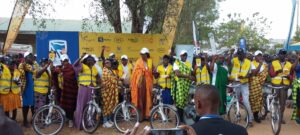
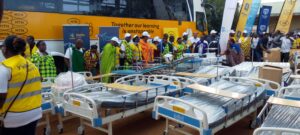
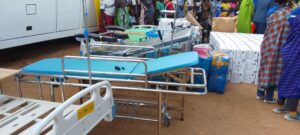
The support included medical equipment and supplies, solar power equipment, ICT tools, bicycles and smartphones for Village Health Teams, digital health training and community health interventions across four health facilities.
But perhaps the real significance of the intervention cannot be measured only in the value of the equipment delivered.
It lies in what the equipment could mean to a mother who no longer has to feel completely alone in an emergency, to a health worker trying to serve a difficult-to-reach community with limited resources, and to a Village Health Team member now able to communicate and move more effectively within the community.
Karita Health Centre IV is not serving Karita alone. According to Dr George Ogwang, the facility’s in-charge, Amudat District has a population of more than 203,000 people, while the health facility also serves about 40,000 people from neighbouring districts. The new support, he says, is expected to strengthen the facility’s ability to respond to this large catchment population, particularly mothers and newborns.
The challenge is made even more difficult by the shortage of health workers. Dr Andrew Munerya, the Acting District Health Officer for Amudat, reported that the district has only 74 health workers, with 53 serving in technical roles and the rest providing support services such as portering and driving.
In such an environment, healthcare is not simply about having a building where patients can go. It is about whether the people inside that building have the equipment, energy, communication tools and human resources needed to respond when a patient arrives. This is where corporate social responsibility becomes more than a ceremonial donation.

Held under the theme “Expand Equitable Health for Every Community,” the Y’ello Care campaign positioned Karita as the final stop after similar interventions at Kibiito Health Centre IV in Bunyangabu, Maddu Health Centre IV in Gomba and Kiyunga Health Centre IV in Luuka. For MTN and its partners, the intervention reflects an approach that goes beyond providing telecommunications services.
According to Dennis Abigaba Kakonge, MTN’s General Manager for Corporate Services and Company Secretary, the company’s focus is on connecting communities to information, equipping healthcare workers with the tools they need and linking households to essential services and opportunities. That philosophy takes on a different meaning in a place like Karita.
Here, a smartphone in the hands of a Village Health Team member can potentially become a bridge between a remote household and a health facility. A bicycle can help a community health worker cover distances that would otherwise take hours on foot. Solar equipment can provide an alternative source of power where reliable energy is essential for healthcare delivery.
Digital training can help health workers adapt to new ways of managing information and supporting patients.
Taken individually, these may appear to be simple interventions. Together, however, they form part of a wider effort to close the gap between remote communities and the services they need. The intervention also highlights a reality that health officials in Amudat openly acknowledge: government alone cannot easily close every gap, particularly in remote and underserved areas.
Dr Munerya says partnerships with the private sector are important in expanding healthcare coverage. He notes that investments in medical equipment, digital health, renewable energy and community health systems help strengthen the existing health system and reinforce government efforts. The call is particularly relevant in a district where communities still face significant disparities in access to healthcare and where residents often travel long distances to reach referral services.
The Acting District Health Officer has also called for the upgrading of Loru Health Centre III to Health Centre IV, arguing that bringing services closer to communities would help reduce the burden of long-distance travel.
It is a reminder that corporate social responsibility cannot replace government investment in public services. But where it is strategically designed and implemented in partnership with government and communities, it can strengthen weak points in the system and create immediate improvements in people’s lives.
MTN’s intervention in Karita was implemented alongside the Ministry of Health and a number of partners, including Stanbic Bank, Uganda Red Cross, Uganda Blood Transfusion Services, UNFPA, Maendeleo Foundation, Zuri Health, MTN MoMo, ClinicPesa, Exquisite Solutions and others. The involvement of multiple institutions demonstrates an important lesson about corporate social responsibility: the greatest impact is often achieved when companies do not work in isolation.
The needs of remote communities are rarely solved by one intervention or one institution. Healthcare requires infrastructure, trained personnel, reliable energy, communication, transport and strong community-level connections. By bringing these elements together, the Karita intervention demonstrates how corporate responsibility can move beyond symbolic acts of charity and become a practical contribution to development.