KARAMOJA NEWS Truth All Day
Related Articles

By Anthony Wadamba
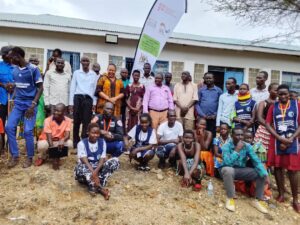
Communities staying along the Uganda-Kenya boarder have come together to fight Gender Based Violence through skilling by Cooperation & Development (C&D). This was revealed during a community training held in Kenya’s lorengkipi ward, Lokiriama sub-county in Turkana County.
Poverty and illiteracy were put at the forefront as the main causes of gender based violence in the Karamojong and Turkana communities. C&D supported over 30 male and female youths from both Countries through the cross boarder women and youth empowering project through skilling for the future.
Maggie Lolem the head of community based social services department at Moroto local district applauded C&D for willing to take on the battle against gender based violence in both countries, especially the boarder areas that brings the two together. Lolem called upon communities to always consider the fight against gender based violence as a serious war than protecting only their accumulated wealth.
Lolem condemned the acts of forced marriages among the communities due to greed of wealth yet at the end, innocent young girls suffer at the expense of heads of cattle, stating that it is criminal to promote child marriage and those promoting the vise must face law. She also added that both men and women need to happily live together to promote peace and development within societies.
Lorem advised the graduated youths in various departments like motorcycle mechanics, tailoring and brick laying, to always use the acquired knowledge to benefit the communities and their families and not to be involved in multiple marriages and other non-productive acts.
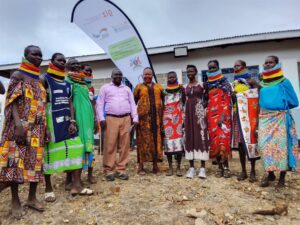
Chief Mathew Korinyang of Namoruputh emphasized the importance of a girl child in the communities if well managed. Korinyang urged that an educated girl child is more expensive not only to the parents but to the society where she grew up and therefore needs to be loved, cared for and treated equally like a boy child.
Korinyang appreciated the efforts of co-operation and development and the government of Uganda for accepting to skill Kenyan students from Uganda. He said that this has helped to draw services like tailoring and motorcycle repairing easy in Lokiriama, saving them from the distances always trekked in search of such services.
Lonyuduk Jimmy the ward administrator Loringikipi ward condemned harmful cultural practices that still exist like body tattooing in both communities, calling them backward and discriminative. Lonyuduk asked the locals why they happily decide to discriminate themselves from the rest of the world with such barbaric acts and beliefs, urging that they must abandon the bad and embrace good practices.
SAMUEL Esinyen a graduate in motorcycle mechanics applauded co-operation and development for the opportunity given and promised to put it into good use. Esinyen also thanked the facilitators on gender based violence deliberations saying, “we lacked information on how to run our families, thinking it was only about what to eat, but we hope to make good use of the information to improve our household welfares and smooth running”.
Dorcas Ekakani Longorito, a graduated in tailoring who dropped out from P8 in Kenya, said the training helped her save her marriage and promoting the wellbeing of her family. She revealed that she is in position of making at least Kshs 700 or UGX 20,000 on a daily basis which limited arguments and fights with her husband since she does not demand for everything but is capable of providing through her earnings as well.
Gender-based violence (GBV) is widespread in Karamoja, Uganda and Turkana, Kenya, driven by patriarchal norms, poverty, and cultural practices like forced marriage and Female Genital Mutilation (FGM). These issues are exacerbated by alcohol abuse, limited access to justice and protection, and inadequate health services for survivors. In response, organizations are working to empower communities, engage leaders, and improve access to services for survivors.
GBV is a significant issue in Turkana County, with high rates of physical, sexual, and domestic violence affecting women and, particularly, adolescent girls. Common types of GBV include defilement, domestic violence, incest, and sexual violence, often driven by factors like resource scarcity.